
Learn how to win hot deals with fast closings, rehab budgets financed, and clear exits that protect your margin.
When to Use Bridge vs. Rehab vs. Ground-Up
Choosing the right product can make or break your deal.
A bridge loan is ideal for rapid acquisition of income-producing or value-add properties that need minimal work before refinancing or sale.
A fix & flip / rehab loan fits best when the property requires moderate to heavy renovation prior to resale.
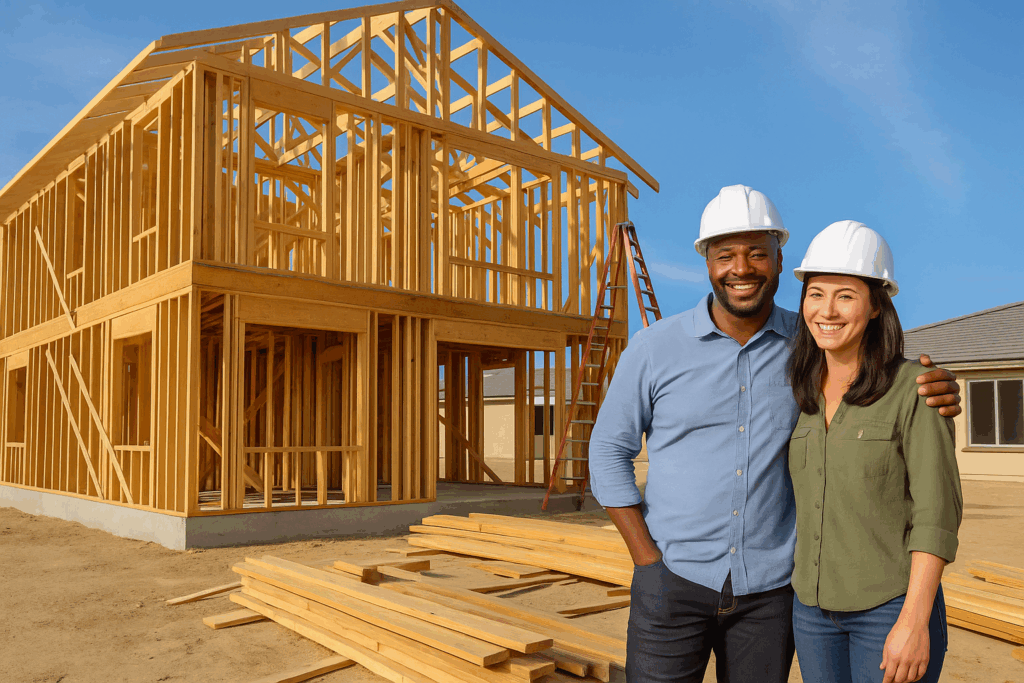
Ground-up construction, on the other hand, applies when you’re starting from dirt, not existing structures.
Acquisition Speed & Competitive Markets
In today’s tight inventory environment, speed wins deals.
Bridge and rehab loans let investors close in as little as 3–7 days, often without full income documentation or bank red tape.
This allows you to make all-cash-equivalent offers, a major advantage when competing against owner-occupants or institutional buyers.
Scope of Work & Holding Periods
Your project scope dictates your loan type and term:
- Light rehab: Cosmetic updates under 10% of ARV (bridge or light rehab loan).
- Medium rehab: Mechanical, kitchen, bath, or roof replacements (standard fix & flip loan).
- Heavy rehab: Structural changes or additions (rehab plus program, up to 18 months).
Typical holding periods range 6–18 months, with interest-only payments and no prepayment penalty, so you’re free to sell or refi early without cost.
How ARV Drives Leverage & Budget
After-Repair Value (ARV) is the projected market value after improvements.
It drives both your leverage and your rehab budget limits.
| Metric | Typical Range | Description |
| Purchase Leverage | Up to 90% of purchase | Based on as-is value |
| Rehab Leverage | 100% of budget | Released via draws |
| ARV Cap | ≤75% of ARV | Combined loan exposure |
| Term | 12–18 months | Interest-only, no prepay penalty |
Higher ARV = higher total loan proceeds, but lenders will still underwrite to the lower of cost or value to protect the project’s margin.
Leverage, ARV & Holding Costs
Bridge and rehab loans are short-term, high-velocity tools.
Here’s how typical investor economics play out.
Sample Deal Model
| Item | Amount |
| Purchase Price | $300,000 |
| Rehab Budget | $80,000 |
| ARV (After-Repair Value) | $500,000 |
| Loan Structure | 90% purchase + 100% rehab (≤75% ARV) |
| Total Loan | $375,000 |
| Cash to Close | $25,000 + closing costs |
| Monthly Interest (12% IO) | ≈ $3,750 |
| Timeline | 8 months |
| Exit | Sold for $500K → $75K+ net profit after payoff |
Rehab Budget, Draws & Contractor Oversight
Rehab funds are disbursed through controlled draws based on verified progress.
Each draw requires photos, invoices, or inspection sign-offs, ensuring work is completed before funds are released.
This structure keeps both the lender and investor aligned and helps mitigate cost overruns or contractor delays.
Selling vs. Refinancing to DSCR
After rehab, you can sell immediately to realize capital gains, or refinance into a DSCR loan and hold as a rental.
A DSCR refi allows investors to unlock long-term cash flow while repaying the bridge or rehab note, often at lower rates once the property is stabilized.
Product Tracks
1–4 Unit Fix & Flip Loans
- Up to 90% purchase + 100% rehab, capped at 75% of ARV
- 12–18 month interest-only term
- No prepayment penalty
- Single-family, condo, townhome, or small multi (≤4 units)
- Designed for experienced or first-time flippers with clean entity structures
Multifamily Bridge Loans
- Up to 80% of purchase, rehab or repositioning included
- 12–24 month term, interest-only, extensions available
- No prepay penalty; refinance to DSCR or agency takeout anytime
- Perfect for 5–30 unit value-add acquisitions or lease-up transitions
Timeline to Close & What Slows Deals
Speed to close depends on readiness. Many investors fund in 7–10 business days when docs are complete.
Here’s what typically affects your timeline.
Appraisals, Title, Insurance & Entity Docs
Delays often stem from:
- Appraisal scheduling (especially in rural markets)
- Title seasoning or liens not cleared before close
- Entity formation docs not matching purchase contract
- Insurance binders missing lender as mortgagee
Start assembling these early to stay ahead of the curve.
Tips to Shave Days Off the Process
- Send full scope of work and contractor budget up front
- Pre-order appraisal and title once LOI is issued
- Keep entity EIN, articles, and operating agreement ready
- Confirm rehab funds wiring instructions early to avoid draw delays
Frequently Asked Questions
Do I need contractor bids to apply?
Yes, for heavy or structural rehab projects. Light cosmetic scopes may use estimated budgets initially.
Can I roll points and fees into the loan?
In most cases, yes. If total leverage remains within LTC and ARV limits.
How are rehab draws released?
Through milestone inspections or photo verification, typically 3–5 draws per project.
Min/max loan amounts?
Loans range from $100K to $5M+ depending on project type and experience.
Can I cross-collateralize properties?
Yes. Equity in one property can help fund another for seasoned investors.
Any prepayment penalties?
No. Sell or refi anytime without penalty, protecting your profit margins.
Build, Flip, or Bridge With Confidence
Realty Capital Financial specializes in fast, flexible investor loans that turn opportunities into closings.
From acquisition through exit, our team provides transparent terms, reliable draws, and experienced underwriting built for investors like you.
👉 Talk to a Lending Specialist »
👉 See Recently Funded Projects